
Online Casino Payment Methods for Australian Players
 Available in AU
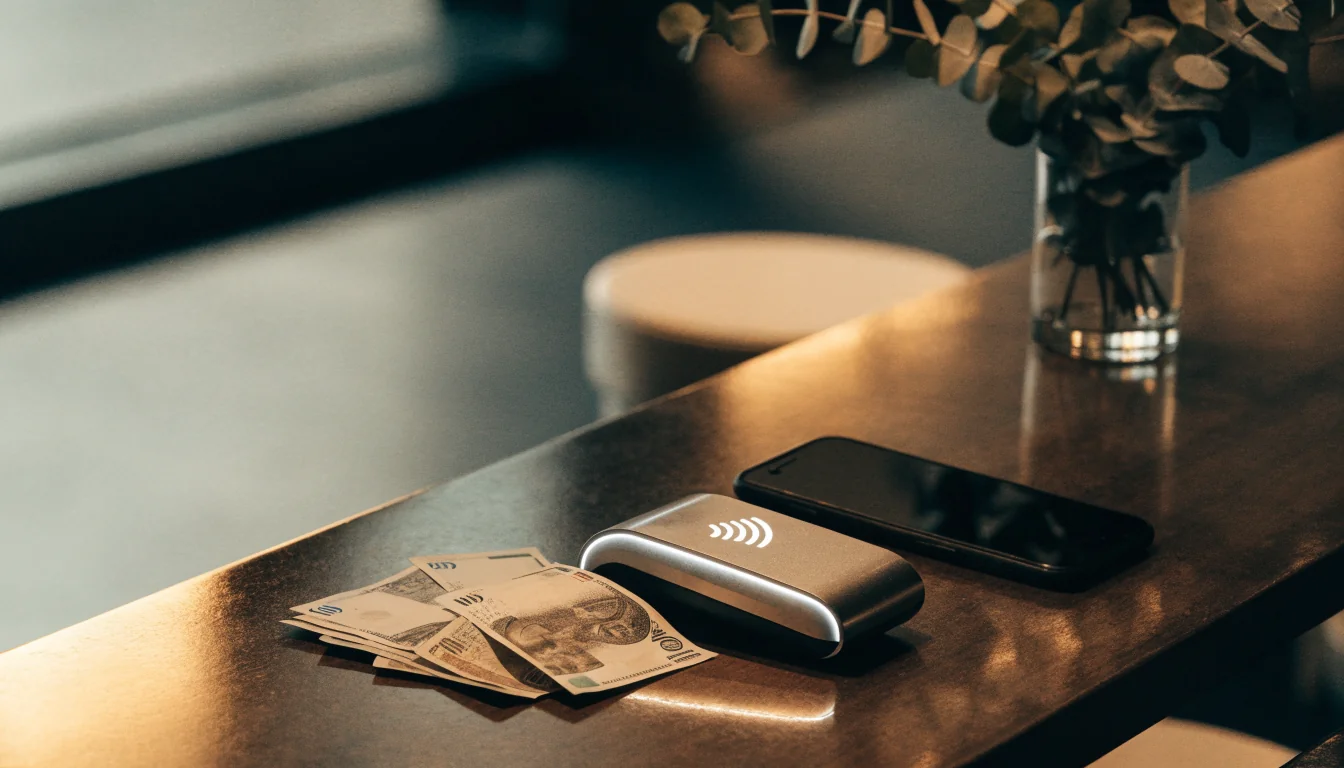
Payment options can differ between deposits and withdrawals, and a method shown in a cashier does not establish that a service is lawful in Australia.
Which Payment Routes Matter for Australian Players?
A payment method is not a complete answer on its own. The useful comparison is between what a route can do, what it costs or exposes, and whether it can serve both ends of a transaction. A method shown beside a deposit option may not also be available for a withdrawal. A specialist review of casino payment options reports this difference, but an operator’s displayed list can change; treat deposit and cash-out support as separate questions.
The legal position comes first. Under the Interactive Gambling Act 2001, it is illegal for an operator to provide real-money online casino games to people in Australia. That covers pokies and table games such as blackjack, roulette and poker. A payment brand’s appearance in an offshore casino’s cashier does not make the service lawful or approved for the Australian market.
The broad categories
Specialist reviews of Australian casino payment solutions discuss several broad categories: bank transfers, e-wallets, prepaid vouchers and cryptocurrency. These labels describe different ways money may be moved or stored; they do not establish that any particular service is available, suitable or lawful for online gambling in Australia.
Choosing a casino payment method means weighing the deposit options and how long withdrawals may take. Use these notes to see which payment-related details are available before deciding where to play.
1. JeetCity Casino
License: Curacao eGaming (Dama N.V.) JeetCity Casino is listed with a Curacao eGaming licence held by Dama N.V. No payment-method or transaction details are provided here.
2. MrPacho
Payout speed: crypto 30-120 minutes, fiat 24-72 hours · Min. deposit: A$30 MrPacho lists crypto payouts at 30–120 minutes and fiat payouts at 24–72 hours. The minimum deposit is A$30.
3. Kingmaker
Payout speed: crypto ~90 minutes, fiat 1-5 days · Min. deposit: A$30 Kingmaker lists crypto payouts at about 90 minutes and fiat payouts at 1–5 days. The minimum deposit is A$30.
4. SpinsUp
License: Curacao Gaming Control Board OGL/2023/174/0082 (Dama N.V.) SpinsUp is listed with Curacao Gaming Control Board licence OGL/2023/174/0082, held by Dama N.V. No payment-method or transaction details are provided here.
5. Roby Casino
License: Curacao eGaming (Roby Games Ltd) Roby Casino is listed with a Curacao eGaming licence held by Roby Games Ltd. No payment-method or transaction details are provided here.
6. Neospin
License: Curacao Gaming Control Board OGL/2023/176/0095 (Hollycorn N.V.) Neospin is listed with Curacao Gaming Control Board licence OGL/2023/176/0095, held by Hollycorn N.V. No payment-method or transaction details are provided here.
7. WinSpirit Casino
License: Curacao eGaming OGL/2024/923/0383 (Antillephone N.V.) · Min. deposit: A$30 WinSpirit Casino is listed with Curacao eGaming licence OGL/2024/923/0383, held by Antillephone N.V. Its stated minimum deposit is A$30.
8. Thor Casino
License: Curacao – Antillephone N.V. (Versus Odds B.V.) · Min. deposit: EUR 20 Thor Casino is listed with a Curacao licence associated with Antillephone N.V. and Versus Odds B.V. The stated minimum deposit is EUR 20.
9. Vegaz Casino
License: Curacao OGL/2024/1335/0780 · Min. deposit: EUR 20 Vegaz Casino is listed with Curacao licence OGL/2024/1335/0780. The stated minimum deposit is EUR 20.
10. Lucky Dreams
License: Curacao · Min. deposit: A$20 (POLi) Lucky Dreams lists a minimum deposit of A$20 for POLi. It is also listed as holding a Curacao licence.
A bank transfer moves funds between bank accounts or through a bank-linked payment arrangement. Its appeal as a category is familiarity: the account holder can see the movement through banking services. But the payment route offered by a gambling operator is not the same thing as an ordinary transfer between people or businesses. Australian financial institutions may restrict gambling transactions, and the law governing the service still matters.
An e-wallet holds or routes funds through a separate account. That can make it distinct from paying directly from a bank account, but it adds another provider and another set of terms to consider. The wallet’s ability to receive funds does not prove that it can send them to every destination, or that a casino’s deposit and withdrawal routes match.
A prepaid voucher is loaded with a set amount, so spending is capped at the value put on it. That gives the category a clear boundary: it is a way to pay, not necessarily a way to receive money back. Voucher deposits may require a separate cash-out route. That distinction matters more than the voucher’s convenience at checkout.
Cryptocurrency is a digital asset transferred through a blockchain network. Bitcoin and other cryptocurrencies are sometimes included in broad comparisons of casino payment methods, but that does not make them an acceptable deposit option for online wagering in Australia. Blockchain transactions are irreversible and do not provide a chargeback option. The risk is not theoretical bookkeeping; once sent, a transaction may not be recoverable through the payment system.
Casino Sites That Accept Amex in Australia
Compare the role, not just the label
For any payment category, separate three questions: can it be used to pay, can it receive a withdrawal, and what happens if a transaction is disputed or sent incorrectly? The first answer does not supply the other two. A cashier can present an attractive set of online casino payment options while offering fewer ways to withdraw. A familiar brand name also says nothing by itself about the legal status of the gambling service.
That is why “best” depends on the criterion. A bank-linked route may matter most to someone who values direct account records; a prepaid voucher is defined by its loaded balance; an e-wallet adds a separate account; cryptocurrency carries irreversible-transfer risk. None of those traits turns an unlawful service into a lawful one.
Phone-based payment language can also blur categories. Using a phone to access a bank account or wallet is not itself a distinct payment rail. The underlying route remains the bank, wallet or other provider. The device is the interface, not the payment solution.
For Australians, the sound starting point is therefore not a shortlist of ways to fund an offshore casino. It is recognition that payment labels describe different mechanics, that deposit support does not guarantee cash-out support, and that real-money online casino services are prohibited when provided to people in Australia. The categories are not endorsements.
Deposits, Withdrawals and the Checks Between Them
A payment that appears on an account’s deposit screen does not necessarily appear as a withdrawal option later. A specialist review notes that casino payment methods can differ between money going in and money coming out. That distinction matters across the transaction lifecycle: the route used to fund an account is not, by itself, evidence that the same route can return funds.
Attention: A payment method available for deposits does not guarantee that the same route is available for withdrawals.
Before any deposit, identify the stated withdrawal route and its conditions. If the information is unclear, treat that as an unresolved part of the transaction rather than assuming that the deposit method will be accepted for cash-out. This is a practical check, not a recommendation to use an offshore casino. Under Australia’s Interactive Gambling Act 2001, providing real-money online casino games to people in Australia is unlawful. A payment option does not change that legal position.
Withdrawal processing may also depend on account verification. A specialist review says an operator may ask for government-issued identification, proof of address dated within the previous three months, and evidence that you own or control the payment method used. These checks can connect the account holder, the registered details and the payment instrument. Keep your details consistent and read any document instructions carefully; submitting material that does not match the requested evidence can leave the review unresolved.
What the checks are for
Identity documents help establish who controls the account. Proof of address can be used to compare the address on file with supporting records, while proof of payment method can establish a connection between you and the instrument involved in the transaction. The exact request can vary, so do not assume that one document will satisfy every check.
The timing of a verification request matters. If it arrives after a withdrawal request, the operator may need to review the supplied information before proceeding. That is separate from the payment route itself: a method might be listed for withdrawals, yet the account may still need to pass checks first. A displayed cash-out option is not a promise that funds will be released without review.
Instant PayID Withdrawals in Australia: How They Work
Use only genuine documents and submit them through the channel specified by the service. Avoid sending sensitive details through an unverified contact route. If the request or its purpose is unclear, pause and seek clarification rather than guessing what will be accepted. Do not share passwords or one-time security codes as “proof” of ownership.
Promotions add another condition layer
A no-deposit promotion does not necessarily mean that any resulting balance can be withdrawn freely. A specialist review notes that these offers may carry wagering, verification and withdrawal conditions. Read the terms governing the promotion before accepting it, including what must be completed and what checks may apply to a withdrawal. “No deposit” describes how an offer begins; it does not settle how a cash-out works.
For a clear comparison, separate the transaction into three questions: what can be used to deposit, what route is available for withdrawal, and what account checks or promotion terms may stand between a request and its completion. Each answer should be explicit. If one is missing, the payment path is not fully understood.
This is the useful test for any online casino payment arrangement: assess the whole route, not just the first screen. Deposit access, withdrawal support and verification are different stages, and satisfying one does not automatically satisfy the others. In Australia, that practical distinction sits beneath a legal boundary: offshore real-money casino services are not lawful for operators to provide to people located in the country. A payment method cannot make the underlying service compliant.
Do
- Identify the stated withdrawal route and conditions before depositing
- Keep your verification details consistent
- Read promotion terms before accepting an offer
Don’t
- Assume deposit methods are accepted for cash-out
- Submit mismatched evidence during account verification
- Accept no-deposit bonuses without checking wagering conditions
PayID in Australia: Availability Is Not the Same as Approval
PayID is a payment identifier linked to an Australian bank account through the New Payments Platform. The identifier can be a mobile number, email address or Australian Business Number (ABN), rather than the account details themselves. Every major Australian bank supports PayID, so the system is familiar within domestic banking.
That banking connection answers a narrow question: whether an account can use PayID. It does not answer whether a particular gambling service may lawfully offer online casino games to people in Australia. Those are separate matters, despite often being blurred together on payment pages.
A specialist review reports that most offshore operators accept PayID as their primary way to take Australian-dollar deposits. Treat that as a report about operator payment arrangements, not as a permanent market-wide guarantee. Payment menus can change, and a method listed by one service may not appear at another. More importantly, an operator’s ability to accept a transfer does not establish that it is permitted to provide the underlying gambling service to someone physically in Australia.
Under the Interactive Gambling Act 2001, it is illegal for operators to provide real-money online casino games, including pokies, poker and table games, to people located in Australia. The legal issue concerns the operator’s provision of the service; a PayID option does not alter that position or amount to government approval. A bank-supported transfer is not a gambling licence. It is simply a banking rail.
Tether USDT Casinos in Australia: Payment Checks
This distinction matters because a familiar payment mark can create a misleading impression of legitimacy. PayID being supported by major banks says something about the payment system’s connection to Australian accounts. It says nothing, by itself, about whether an offshore casino is authorised to offer gambling in Australia, whether its service is lawful here, or what protections apply to an account held with it.
There are therefore two different checks in any discussion of PayID: technical availability and legal status. Technical availability means the payment identifier can be used within the banking system and that an operator reports accepting it. Legal status concerns whether that operator may provide real-money casino gambling to people in Australia. One cannot stand in for the other. A working payment button does not settle the legal question.
The same separation applies to phrases such as “Australian-dollar payments” or “made for Australian customers”. Currency and audience language can describe how a payment is handled, but neither phrase changes the law. Nor does widespread reporting of PayID acceptance turn an offshore service into an approved Australian casino. The payment method is not a shortcut around the rules.
If you encounter PayID presented alongside online casino services, read the claim narrowly: it describes a stated payment option, not a mark of lawful operation. The relevant boundary is not whether funds can technically move between an Australian bank account and a payment destination. It is whether the service may provide online casino gambling to someone in Australia at all.
A familiar transfer route can make an unfamiliar operator seem ordinary. That is precisely why the two questions must stay separate: PayID availability concerns the payment system; approval concerns the gambling service. One is not evidence of the other.
Legal Status
Under the Interactive Gambling Act 2001, it is illegal for operators to provide real-money online casino games to people in Australia.
Payment Gateways, Fees and Currency Conversion
A payment gateway is the processing layer between a payment instruction and the account that receives the funds. Its role is easy to overlook because the screen may show one amount while charges are applied elsewhere in the transaction. For a person reviewing an online casino payment gateway, the useful comparison is not simply whether a method is listed: it is what deductions can occur, and whether the displayed balance and the amount ultimately received use the same currency.
Separate three kinds of cost: a provider’s transaction fee, a casino’s own charge, and currency conversion. They are not interchangeable. A percentage fee may be taken by a payment provider for a particular transaction, while an exchange-rate margin affects the value when AUD is converted into another currency. If an account balance is denominated in EUR, a transfer can therefore lose value through conversion even when no separate fee is displayed. The gateway may process the payment correctly; the final amount can still be lower than the amount sent.
A specialist review reports that converting AUD to EUR can cost 2–4%. Treat that figure as a reported conversion cost, not a universal tariff: the amount depends on the terms applied to the transaction. Check which currency the casino balance uses, which currency the payment provider receives, and whether the conversion is performed by the provider or another party. If more than one conversion step is involved, the cost may not be obvious from a single fee line.
Fast Withdrawal Casinos in Australia: Payment Speeds
Transaction charges need their own line in the comparison. A specialist review reports that some casinos charge 1–3% on Skrill transactions. That is a reported casino-side charge, not a fixed Skrill price or a standard applying to every operator. The same review describes Skrill withdrawals to a bank as taking 1–2 days, but timing is separate from cost: a faster or slower transfer does not tell you how much will be deducted.
The review also reports a 1.45% Neteller charge for credit-card funding. That figure should not be read as a recommendation to fund gambling with a credit card; credit-card payments are not an acceptable deposit route for online gambling in Australia. The useful point is narrower: funding charges can exist before a gambling-related transaction is even considered, and a percentage applied at one stage may be distinct from a casino fee or exchange-rate cost.
A practical comparison table should therefore keep the categories apart:
| Cost line | What to check |
|---|---|
| Provider transaction charge | Whether the payment service applies a fee to that transaction |
| Casino-side charge | Whether the operator deducts a separate amount |
| Currency conversion | The currencies being exchanged and the conversion terms |
| Amount received | The net amount after applicable charges |
Do not add percentages together blindly: they may apply to different amounts or at different stages. Read the fee terms for the relevant transaction and currency, then compare the expected net amount rather than the headline figure. The winner depends on that criterion. A gateway that looks inexpensive at the payment stage may cost more once conversion is included. The arithmetic matters.
Payment Systems That Trade Speed for Predictability
BPAY is a bank-payment option whose reported timing favours planned transfers over immediate access. A specialist review puts a BPAY payment at one to two business days. Treat that as the timing stated by that review, not a promise for every transaction: availability and handling can depend on the service involved, and the estimate may change.
That distinction matters if you are comparing payment systems by what they let you do in real time. A transfer that takes business days cannot be treated as an instant top-up for live play. A specialist review describes BPAY as rarely used for real-time gameplay and as a possible fallback when PayID is unavailable. That is a narrow role, not evidence that BPAY will be offered by a particular service or that it will solve a failed payment.
BPAY is typically used as a slower, scheduled transfer option and may serve as a fallback when PayID is unavailable.
The practical comparison is therefore about predictability versus immediacy. BPAY may suit a person who can plan around a transfer window; it is a poor fit for someone expecting funds to appear at once. If timing is the deciding criterion, the reported one-to-two-business-day window is the material detail. If having an alternative matters more, its possible backup role is relevant—but only where the payment option is actually presented and accepted.
Do not confuse a payment option’s availability with the legality of the service taking the payment. Under the Interactive Gambling Act 2001, operators cannot lawfully provide real-money online casino games to people physically in Australia. A payment route does not change that position. Descriptions of BPAY on a website, or a payment instruction that appears to work, are not approval for an online casino to serve Australian customers.
This also changes how to read claims about an “online casino payment system”. The label may describe how a transaction is routed, but it says nothing by itself about whether the underlying service is permitted in Australia. A bank transfer can be a legitimate payment mechanism in other contexts; that does not make every use of it lawful. The distinction is plain, if inconvenient.
Casinos That Accept Ethereum (ETH) in Australia
For a neutral timing comparison, BPAY belongs on the slower, scheduled side rather than the real-time side. Its reported interval is more useful as a planning signal than as a guarantee, while its described fallback role applies only when PayID is unavailable and the operator supports BPAY. Neither point should be read as a recommendation to fund offshore gambling. The legal status of the service comes first; payment timing cannot fix it.
Match the Payment Portal to Your Cash-Out Route
A payment option displayed at the cashier tells you that a deposit may be accepted; it does not establish that the same route can return funds to you. Deposit and withdrawal menus can differ. Before entering payment details, check the withdrawal terms separately and identify the route the operator says it would use for a payout. If that route is unclear or unavailable to you, the deposit option is not a useful basis for proceeding.
There is a more important point for Australians: the Interactive Gambling Act 2001 prohibits operators from providing real-money online casino games to people physically in Australia. A polished casino payment portal, an Australian-dollar option or a familiar payment name does not alter that legal position. Do not treat a payment method’s presence as evidence that the service is lawful or locally approved.
Read the portal as two separate menus
Assess the cashier against two distinct criteria:
| Check | What to establish |
|---|---|
| Deposit | Is the named route shown as available for adding funds? |
| Withdrawal | Does the operator explicitly list that route for returning funds? |
Do not infer the second answer from the first. A specialist review reports that PayID deposit availability depends on the operator and that withdrawal support needs to be checked separately. That is a report about operator-specific arrangements, not a guarantee that a particular portal currently supports either direction. Confirm the terms shown by the operator itself, and do not rely on a payment logo alone.
This distinction matters when comparing any casino payment platform. A method can appear in a deposit panel yet be absent from the cash-out options. The phrase “same payment method” can also be ambiguous: look for the actual named route in the withdrawal information, not a general statement that withdrawals are supported.
Treat familiar names with care
Searches for PayPal, POLi, Boku or Neosurf may bring up pages that list them as possible payment choices. A name in a review or on a portal is not proof of current availability, and it says nothing by itself about whether withdrawals are supported. PayPal has explicitly banned gambling transactions in Australia since 2021, so it should not be presented as an available route for Australian online casino payments.
Attention: PayPal has explicitly banned gambling transactions in Australia since 2021 and should not be viewed as an available route.
For PayID, check both directions independently rather than assuming that a deposit option settles the question. The same principle applies when a page describes a “popular” payment method: popularity is not a cash-out promise, and an operator’s menu may change.
If the portal gives no clear withdrawal route, stop there. Do not deposit on the assumption that support can be arranged later. Confirming a cash-out path is a basic decision criterion, but it cannot make prohibited online casino services lawful in Australia. A payment screen is not a legal clearance.
E-Wallet Providers: Compare the Cash-Out Terms
For a cash-out comparison, separate the time a payment provider may take from the fee attached to using it. An e-wallet can be quicker than a bank route yet still cost more, while a low stated fee says nothing about when funds will arrive. The better option depends on which criterion matters to you: timing, cost, or a direct bank payout.
A specialist review describes MuchBetter withdrawals as faster than traditional bank-transfer cash-outs, which it says can take as long as five days. Treat that as a comparison reported by that review, not a fixed service promise: the actual route and its terms depend on the operator and may change. If timing is your priority, the comparison may favour MuchBetter over a bank transfer, but check the withdrawal terms that apply before relying on it.
MuchBetter
Reported as faster than traditional bank-transfer cash-outs, which may take up to five days.
Skrill
Reported withdrawal time of one to two days, with some casinos applying a 1–3% transaction charge.
Skrill presents a different trade-off when funds are moved from the wallet to a bank account. A specialist review gives a withdrawal time of one to two days and reports that some casinos apply a transaction charge of one to three per cent. The fee is not described as universal, so check whether it applies to the specific cash-out route and how it is calculated. A stated transfer time and a possible percentage fee belong in separate columns; combining them into a single “fast” or “cheap” label hides the cost.
| Cash-out route | Reported timing | Reported cost |
|---|---|---|
| MuchBetter | A specialist review says it is faster than traditional bank transfers, which may take up to five days | No fee detail established here |
| Skrill to bank | A specialist review reports one to two days | Some casinos are reported to charge one to three per cent |
This comparison is not a guarantee of processing. The operator may need to handle a request before a provider or bank transfer begins, and the available route can differ between operators. Confirm the cash-out method and its current conditions before making any payment; a wallet appearing among deposit options does not establish that it will be available for withdrawal.
The legal distinction matters in Australia. The Interactive Gambling Act 2001 prohibits operators from providing real-money online casino games to people in Australia. Payment-provider details do not make an offshore casino lawful to serve Australian customers, and this comparison is not an endorsement of using one. It is also not a reason to fund a wallet with a credit card for gambling. A fee attached to wallet funding does not turn credit into an acceptable casino deposit route.
For a practical comparison, record the named wallet, whether withdrawal to a bank is supported, the stated processing time, and any operator or provider fee. Choose by the criterion you value, but verify the terms for the relevant route rather than assuming that one provider’s reported timing applies everywhere. Fast is not the same as certain.
Instant Payments Have Limits
“Instant” describes a stated processing speed, not whether a transaction will be approved. A specialist review reports Visa and Mastercard deposits as instant, but that timing assumes the payment can proceed. For Australian customers, that is a significant qualification: another specialist review reports that Australian financial institutions block many standard card transactions directed to offshore casinos.
Trustly Casino Sites in Australia: What’s Verified
The two points are not contradictory. A payment method can be integrated into an operator’s payment page and still fail at the bank or card-issuer stage. Casino payment integration is therefore not proof that a card transaction is available to you, or that it will be accepted. The useful comparison is between the advertised speed and the chance that the transaction can actually be made—not between “instant” and “slow”.
There is also a legal boundary. Under the Interactive Gambling Act 2001, operators cannot provide real-money online casino games to people physically located in Australia. A rapid payment label does not change that position. Credit cards and credit-related products are not appropriate deposits for online gambling; an apparent payment option should not be treated as permission to use them.
If a card transaction is declined, repeated attempts do not make the route more dependable. Check what your financial institution permits and do not assume that another card brand, a different payment screen or a promised instant payment will produce a different result. The same caution applies when an operator displays a method: availability on a page is not the same as approval by the institution handling the transaction.
For a practical comparison, keep three separate questions in view: how quickly the operator says a payment is processed, whether your financial institution will allow the transaction, and whether the service itself may legally be offered in Australia. The first answer alone is not enough to call a method suitable. Fast on paper. Not necessarily available.
Payment Availability
- Card deposits may be instant but are often blocked by Australian financial institutions
- A listed payment option is not proof of bank approval or transaction availability
- Rapid payment labels do not change the legal prohibition of real-money online casinos in Australia
Payment Apps and Vouchers: Know Where the Money Can Go
A payment app can make a transaction feel simple, but the important comparison is what it can do at each end: fund an account, return money, or neither. These are separate functions, not two sides of a guaranteed route. For Australians, there is also a legal boundary: the Interactive Gambling Act 2001 prohibits operators from providing real-money online casino games to people in Australia. The payment details below are informational, not a recommendation to use such a service.
A specialist review reports that Apple Pay deposits may be made through a phone’s digital wallet, with biometric authentication used to approve the payment. That describes a way to authorise a payment; it does not establish that every operator accepts it or that it can be used to receive a withdrawal. Apple Pay is not a cash-out method here. If a payment page displays a phone-wallet button, treat that as a deposit option only unless the withdrawal terms explicitly say otherwise.
Casino Sites Accepting Credit Cards in Australia
Vouchers have a different constraint. They cap spending at the value loaded onto them, which can help keep the amount available for payment separate from other funds. But a voucher deposit generally cannot be sent back to the same voucher as a withdrawal. You would therefore need a separate cash-out route—and should confirm that route before paying. A neat deposit button is not a complete payment plan.
The same distinction matters when you see a named option such as Paysafecard or Neosurf. A voucher’s presence in a payment menu does not mean it can receive winnings. Do not assume a voucher can serve as both the way in and the way out.
| Payment type | Practical question |
|---|---|
| Phone wallet | Is it presented only for payment, or does the withdrawal policy expressly support it? |
| Prepaid voucher | What separate method, if any, is available for cashing out? |
Before any payment, read the operator’s terms for both directions and check that the stated withdrawal route is available to you. This does not make an offshore casino lawful in Australia: the law bars operators from providing real-money online casino services to people physically in the country. Payment convenience does not alter that.
Mobile Payments: A Phone Number Can Link to a Bank Account
“Mobile payment” can describe two different things. In one case, your phone is simply the device you use to open a payment page or approve a transaction. In another, a mobile number identifies a bank account through a payment system. The distinction matters: using a phone does not, by itself, tell you where the money comes from or how a payment is routed.
PayID is the second kind. Through Australia’s New Payments Platform, a mobile number can be registered as an identifier for an Australian bank account. An email address or ABN can serve as an identifier too. The number is therefore a link to the account, not a separate wallet balance held on the phone.
CashToCode Casinos in Australia: What to Verify
That is different from tapping a phone to use a digital wallet. With a wallet, the phone is the payment device; with PayID, the registered number helps identify the bank account. The two may both appear under a broad “mobile payment” label, but that label alone does not explain the actual payment route. Read the method’s description before treating one as the other.
A casino payment page may display PayID as an option, but the presence of a mobile-number field does not prove that the payment is PayID. Nor does a phone-friendly checkout establish that a mobile wallet is supported. Names and instructions matter more than the size of the button.
There is also a legal distinction that payment terminology cannot settle. Under the Interactive Gambling Act 2001, operators may not provide real-money online casino games to people physically located in Australia. A bank-account link or mobile checkout does not change that rule. Payment access is not legal approval.
So, when you encounter a reference to mobile casino payments, separate the device from the funding route: are you using a phone to access a payment, or is your mobile number the account identifier? That is the useful comparison. A phone is not a payment method by itself.
Do Australian online casinos charge fees for deposits or withdrawals?
Yes, fees can apply: bank transfers may cost $5–$15, some casinos charge 1–3% for Skrill transactions, and currency conversion from AUD to EUR can cost 2–4%. Crypto withdrawals are usually free, but Ethereum gas fees can reduce the amount you receive.
Which casino payment method is best for Australians?
There is no single best method: the right choice depends on whether you value direct bank records, a capped prepaid balance, a separate e-wallet account, or another feature. Check deposit and withdrawal support separately, and remember that providing real-money online casino games to people in Australia is unlawful.
Can I use PayPal for online pokies in Australia?
No. PayPal has banned gambling transactions in Australia since 2021, and real-money online casino games are unlawful when provided to people in Australia.
How quickly does my money actually appear after I hit deposit?
Visa and Mastercard deposits are instant, while BPAY payments take one to two business days. The timing depends on the payment route.
Can I use a credit card to gamble online in Australia?
Many standard Visa and Mastercard transactions to offshore casinos are blocked by Australian financial institutions. Also, providing real-money online casino games to people in Australia is unlawful.
Why would I bother with MuchBetter casinos instead of a normal bank transfer?
MuchBetter withdrawals are faster than traditional bank-transfer cash-outs, which may take up to five days. Bank transfers can also be processed manually once or twice a week.